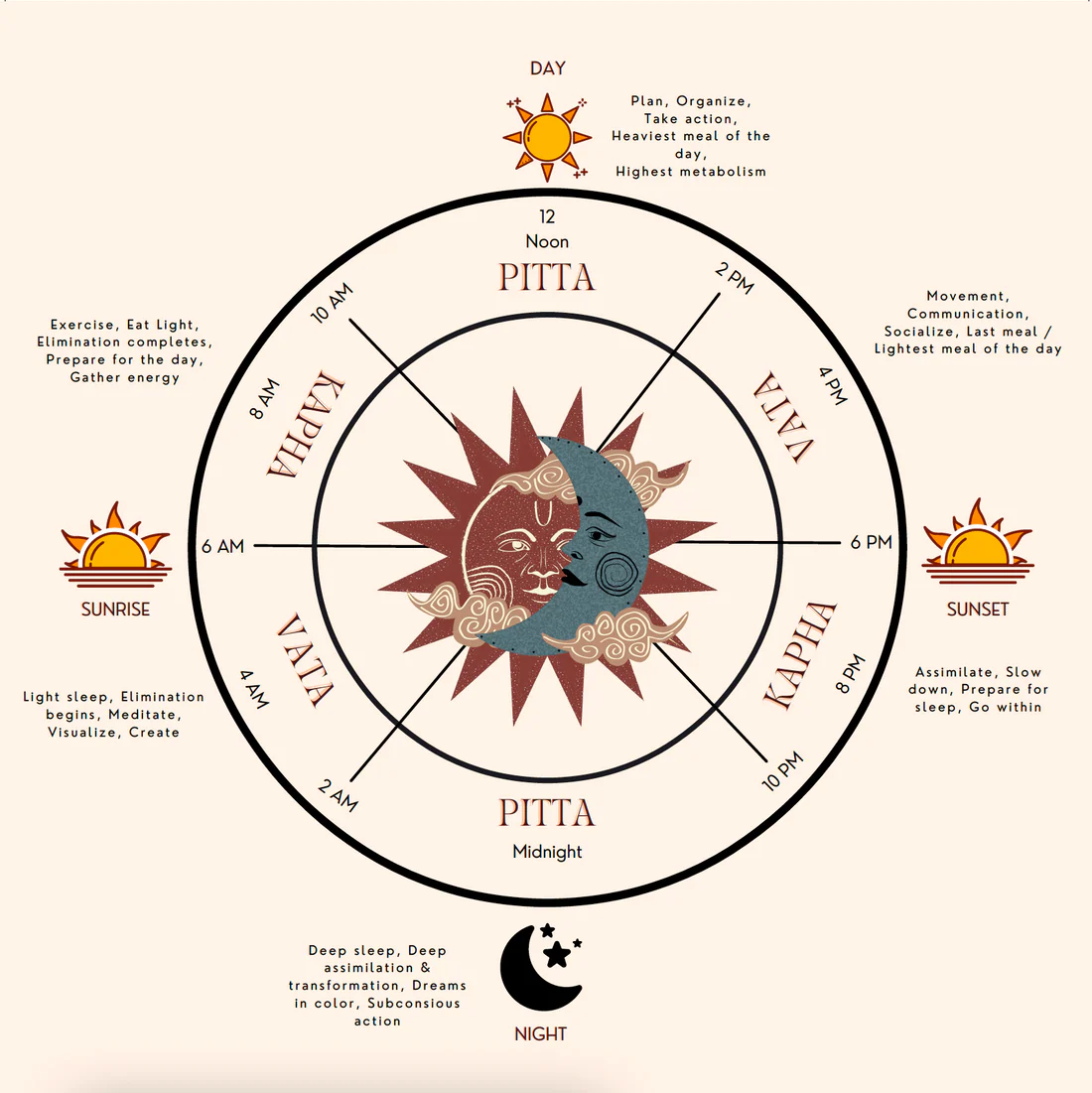
The Three Doshas: An Introduction to Vata, Pitta, and Kapha in Women's Health
Ayurveda is one of the world's oldest medical systems — originating in India over 5,000 years ago and still actively practised today. Its central insight is that individuals are not the same, and therefore what is healthy for one person may not be healthy for another. The three doshas — Vata, Pitta, and Kapha — are the constitutional energies that explain this individual variation.
Every person is a combination of all three doshas, with one or two typically dominant. Your dominant dosha shapes your physical tendencies, your emotional patterns, how you respond to stress, what depletes you, and what restores you. Understanding it is one of the most practically useful things you can know about your own health.
Vata — Space and Air
Vata is the energy of movement. It governs all movement in the body — nerve impulses, circulation, breathing, peristalsis, and the movement of thoughts. People with dominant Vata tend to be:
In balance: Creative, enthusiastic, quick-thinking, adaptable, light, and communicative. They generate ideas readily and move through the world with curiosity.
Out of balance: Anxious, scattered, unable to finish what they start, physically cold and dry, sleep-disrupted, irregular in appetite and digestion, prone to worry that loops without resolution. Vata imbalance is the most common pattern in women under high stress — the more the body is pushed, the more Vata amplifies.
Physical tendencies: Lighter frame, variable appetite, irregular digestion, tendency toward constipation, cold hands and feet, dry skin and hair, variable energy.
What aggravates Vata: Irregular routine, cold and dry weather, insufficient sleep, too much stimulation, excess travel, undereating, excessive exercise.
What supports Vata: Warmth, routine, grounding. Warm cooked food, oil (internal and external — Abhyanga), consistent sleep and meal times, gentle movement, warmth in the environment. Reducing stimulation and input. Creating predictability.
Pitta — Fire and Water
Pitta is the energy of transformation. It governs digestion, metabolism, intelligence, vision, and the transformation of experience into understanding. People with dominant Pitta tend to be:
In balance: Sharp, focused, organised, passionate, confident, with strong digestion and leadership capacity. They follow through on what they start and have clear analytical minds.
Out of balance: Irritable, perfectionistic, critical (of self and others), prone to inflammation (skin, gut, joints), burning sensations, intense competitiveness, difficulty relaxing or accepting imperfection. Pitta imbalance is common in high-achieving women — the same qualities that drive success, in excess, drive inflammation and burnout.
Physical tendencies: Medium frame, strong appetite, efficient digestion (may be too fast — loose stools, heartburn), warm body temperature, sensitive skin prone to redness or rash, sharp features.
What aggravates Pitta: Heat, intensity, overwork, spicy and acidic food, alcohol, competition, criticism, not taking breaks.
What supports Pitta: Cooling and moderation. Cooling foods (cucumber, coconut, sweet fruits, coriander). Regular breaks. Releasing the need to be right or perfect. Time in nature, particularly near water. Reducing alcohol, spice, and heat exposure. Physical activity that is releasing rather than competitive.
Kapha — Earth and Water
Kapha is the energy of structure and stability. It governs physical form, lubrication, and the body's capacity to maintain and hold. People with dominant Kapha tend to be:
In balance: Calm, steady, loyal, nurturing, with excellent endurance and a strong immune system. They are the anchoring presence in relationships and communities, with reliable energy and good long-term memory.
Out of balance: Heavy, sluggish, resistant to change, prone to attachment and holding on — to weight, to situations, to emotions. They may feel unmotivated, sleep excessively without feeling rested, experience weight gain despite reasonable diet, congestion, and a general sense of stagnation.
Physical tendencies: Larger, more solid frame, strong immune system, slower digestion and metabolism, tendency to weight gain, good stamina once moving.
What aggravates Kapha: Inactivity, cold and damp conditions, heavy and sweet food, excess sleep, lack of stimulation, routine that becomes stagnation.
What supports Kapha: Movement and stimulation. Energising practices, brisk exercise, varied routine, lighter and warming foods, reducing dairy and refined sugar, waking early. The Kapha body responds well to being challenged — gently but consistently.
The Doshas and the Menstrual Cycle
Each phase of the menstrual cycle has a dominant dosha:
- Menstruation — Vata phase: Light, downward movement, release. Vata aggravation can cause cramping, anxiety, and constipation during this phase.
- Follicular — Kapha phase: Building, nourishing, growing. The body is accumulating resources. Kapha aggravation can cause bloating and sluggishness.
- Ovulation — Pitta phase: Peak transformation, clarity, outward expression. Pitta aggravation can cause inflammation and intensity around ovulation.
- Luteal — Vata increasing: The gradual increase in Vata as the cycle moves toward its end explains the increasing sensitivity, inward pull, and anxiety of the premenstrual phase.
Frequently Asked Questions
How do I find out my dosha?
A qualified Ayurvedic practitioner assesses your dosha through detailed consultation — looking at your physical characteristics, digestion, sleep patterns, emotional tendencies, and current symptoms. Online quizzes provide a rough indication but are not the same as an assessed constitutional reading. The most useful starting point is simply noticing which description most consistently reflects your natural tendencies — not who you are under stress, but who you are when well.
Can my dosha change?
Your Prakriti — your constitutional dosha — does not change. It is your baseline nature. Your Vikriti — your current state of imbalance — can change significantly based on lifestyle, stress, season, and age. The goal of Ayurvedic care is to identify and address the Vikriti while understanding and supporting the Prakriti.
How do the doshas relate to hormonal health?
Vata imbalance corresponds closely to low progesterone patterns — anxiety, irregular cycles, poor sleep, cold, scattered energy. Pitta imbalance maps to inflammatory hormonal conditions — oestrogen dominance, endometriosis, PCOS with a hot, inflammatory picture. Kapha imbalance maps to sluggish metabolism, insulin resistance, and the stagnant picture of hypothyroidism or PCOS with weight gain. Understanding your pattern guides which systems to prioritise.