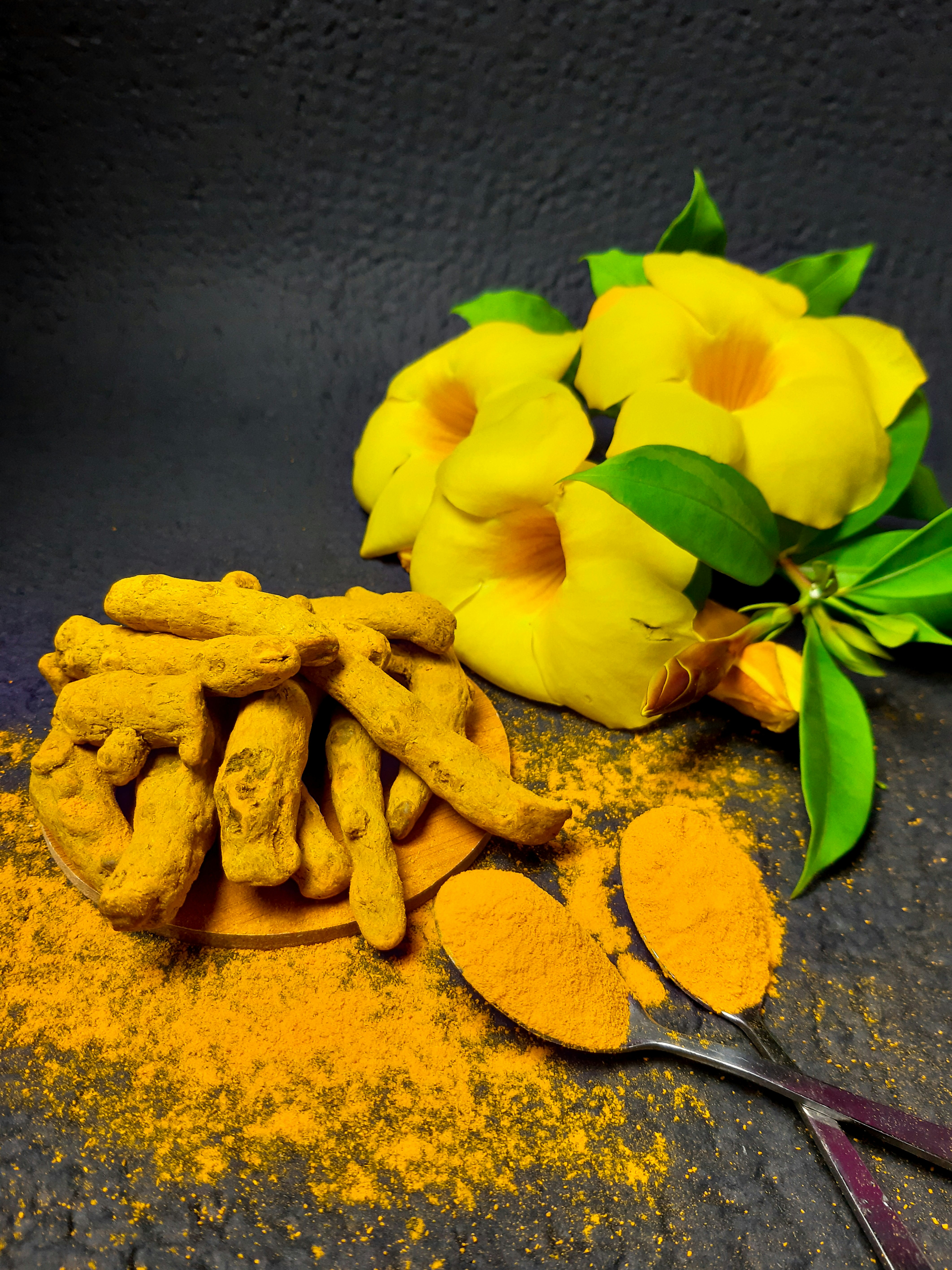
Turmeric and Women's Health: What Curcumin Actually Does for Hormones, Inflammation, and the Gut
Turmeric is one of the most studied medicinal plants in the world. There are over 6,000 peer-reviewed studies on curcumin — its primary bioactive compound — covering inflammation, liver function, metabolic health, mood, hormonal pathways, and gut health. It has been used in Ayurveda for over 4,000 years, known as Haridra, as both a digestive and an anti-inflammatory.
For women navigating hormonal imbalance, inflammation, or gut issues, turmeric is one of the most accessible and broadly useful tools available. Here is what it actually does — and how to use it so it works.
What Curcumin Does
Reduces inflammation
Curcumin is one of the most potent natural anti-inflammatory compounds studied. It inhibits NF-kB — a key molecule that switches on genes involved in inflammation — and reduces pro-inflammatory cytokines including TNF-alpha, IL-1, and IL-6. For women with endometriosis, PCOS, joint aching, skin conditions, or perimenopausal inflammation, this is directly relevant.
Supports liver function and oestrogen clearance
Curcumin supports both Phase 1 and Phase 2 liver detoxification pathways — the pathways through which the liver processes and prepares oestrogen for elimination. For women with oestrogen dominance or heavy periods, supporting liver function is one of the most important interventions, and turmeric is a practical daily tool for this.
Supports gut health
Curcumin reduces intestinal inflammation, supports the gut lining, and has prebiotic effects — feeding beneficial gut bacteria. For women whose hormonal symptoms are driven by gut dysbiosis and impaired oestrogen elimination, gut support through turmeric compounds the benefit of the liver support.
Supports mood
Several studies have found curcumin comparable to antidepressants in mild-to-moderate depression — through its effects on serotonin and dopamine pathways, and its anti-inflammatory effects on neuroinflammation. For perimenopausal mood symptoms with an inflammatory component, this is meaningful.
Supports blood sugar regulation
Curcumin improves insulin sensitivity and reduces glucose-driven inflammation — directly relevant for PCOS and perimenopausal insulin resistance.
The Absorption Problem — and How to Solve It
Curcumin is poorly absorbed on its own. Eaten as a spice in food, bioavailability is low. Two things change this dramatically:
- Black pepper (piperine) — increases curcumin absorption by up to 2,000%. This is why the combination of turmeric and black pepper is traditional in South Asian cooking — and why turmeric supplements should always include piperine.
- Fat — curcumin is fat-soluble; taking it with a fat-containing meal or cooking it in oil significantly improves absorption
- Heat — gentle cooking activates curcumin; raw turmeric in cold water is less effective than cooked or warm preparations
How to Use Turmeric Daily
- Golden milk — warm milk (dairy or plant-based) with turmeric, black pepper, a small amount of fat (ghee or coconut oil), and optional ginger and cinnamon. The fat and warmth maximise absorption.
- In cooking — add to curries, soups, roasted vegetables, or scrambled eggs with black pepper
- Supplement — for therapeutic doses (500–1000mg curcumin daily), a supplement with piperine or a phospholipid delivery system (like Meriva or BCM-95) is more reliable than food alone
Cautions
Turmeric at culinary amounts is safe for virtually everyone. High-dose curcumin supplements should be used with caution if you take blood thinners (anticoagulants), have gallstones (curcumin stimulates bile production), or are pregnant. As with all supplements, discuss with a practitioner if you have existing health conditions.
Frequently Asked Questions
How much turmeric should I take daily?
For general anti-inflammatory and digestive support, 1–2 teaspoons of turmeric in cooking daily with black pepper is effective. For therapeutic purposes — endometriosis, significant inflammation, or mood support — supplement doses of 500–1000mg curcumin with piperine are used in most studies.
Does turmeric help with period pain?
Yes — through its effects on prostaglandins (the inflammatory compounds that cause cramping) and its anti-inflammatory properties. Several studies show curcumin reduces menstrual pain, particularly when taken consistently rather than just during the period.
Is fresh turmeric better than powder?
Fresh turmeric root contains curcumin but in lower concentrations than dried powder. Both are beneficial. For cooking, powder is more practical. For therapeutic purposes, a standardised supplement with known curcumin content is most reliable.